Confirming which side is leaking
The house is isolated at its shutoff and the meter is watched. That separates a leak on your service line from an irrigation valve, a passing toilet or a fixture still using water indoors.
The pipe that carries water from the meter to the house is the one nobody thinks about until the pressure drops or a strip of yard stays wet through a dry week. An independent plumber can trace that line, find where it is losing water and set out the repair choices before anything is dug.
Service lines around Austin are not all the same age or material. Houses in the central neighborhoods built between the 1930s and the 1960s often still have galvanized steel running in from the meter, and that pipe narrows with corrosion from the inside until the flow at the shower is a fraction of what it should be. Homes from the 1980s onward usually have copper or plastic, which tends to fail at a joint or at a spot where the pipe was nicked when the lot was built. West of MoPac the line sits in shallow limestone and caliche, so the ground it is buried in matters as much as the pipe itself.
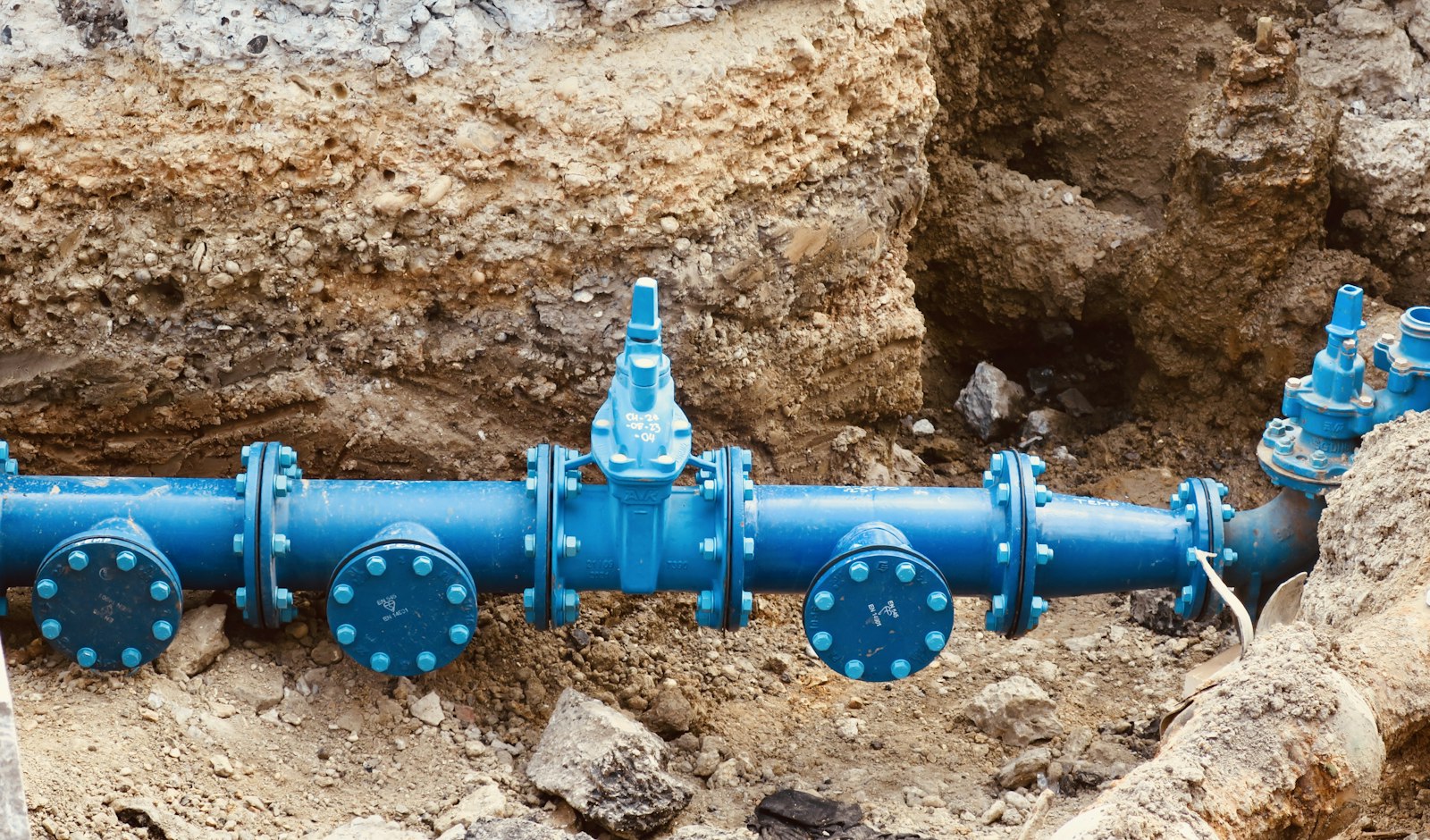
A buried line is diagnosed from the meter inward. The point is to dig once, in the right place, rather than open the yard looking for the fault.
The house is isolated at its shutoff and the meter is watched. That separates a leak on your service line from an irrigation valve, a passing toilet or a fixture still using water indoors.
The run between the meter box and the house is traced and tested so the excavation is as short as the ground allows. Where the water surfaces is often nowhere near where the pipe failed.
A single clean failure in sound pipe can be repaired at the spot. A line that is corroded end to end is replaced; ask which of the two the inspection actually supports.
There are two broad ways to renew a service line. An open trench follows the pipe from the meter to the house and is the straightforward choice on a short, clear run. A trenchless replacement works from a small pit at each end and pulls new pipe along the old route, which spares a lawn, a driveway or mature trees but needs enough room to set up and ground that will cooperate. Rock, a long route or paving over the line all steer the decision.
Before you agree to anything, ask what will be crossed on the way: irrigation lines, gas and electrical services, a sidewalk or a stone drive. Ask who pulls the permit, who marks the buried utilities and who is responsible for putting the surface back afterward. In most Texas cities the meter is the dividing line, with the water provider looking after its side and the property owner responsible for the pipe running in from there, so it is worth confirming that with your provider before the work is scheduled.
If the leak has not been narrowed down yet, start with leak detection. Water surfacing indoors instead of in the yard points to slab leak repair, and a line that has already split open is burst pipe repair. Outside work runs differently from town to town, which is covered on the Georgetown plumbing page and across the rest of the service areas. You can also read how a service call works.
It depends far more on the ground than on the pipe. Length of the run, depth, whether limestone has to be broken, and what sits on top of the line all drive the number, and a spot repair is a different job from replacing the whole service. Ask the independent plumber to locate the fault first and quote the option you pick before work starts.
Usually yes. In most Texas cities the water provider maintains the main and the meter, and the line from the meter into the house belongs with the property. Your provider can confirm where its responsibility stops, and that answer decides who repairs what before anyone starts digging.
Often, yes. A trenchless pull needs only a pit at each end and follows the existing route, which is why it suits a long run under grass, a drive or roots. It is not always possible: sharp bends, shallow rock and other utilities crossing the path can make an open trench the safer and cheaper answer. Both are priced at the property.
If water is running to waste, close the valve in the meter box at the curb, but only if the lid lifts easily and you can reach the valve without forcing it. Do not dig for the pipe yourself; gas and electrical services are often in the same ground, and Texas 811 marks buried lines at no charge before any excavation. Tell the plumber what you have already shut off when you call for service.
Call and say what the pressure is doing and where the ground stays wet.